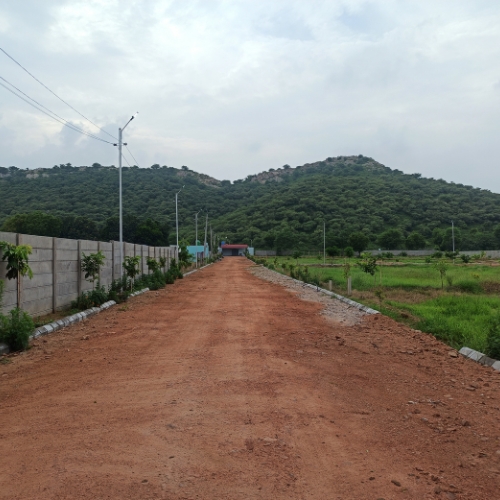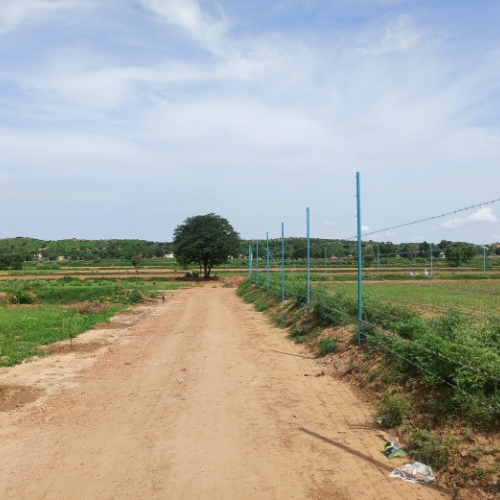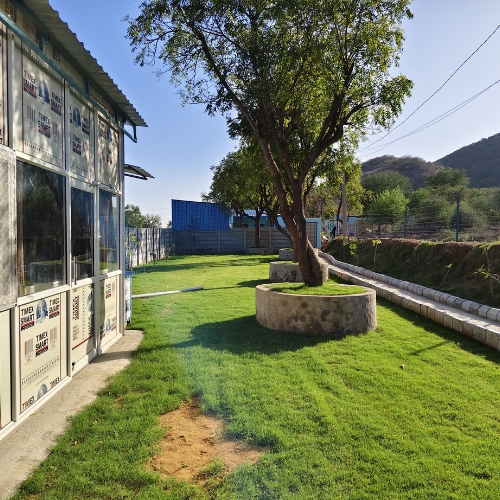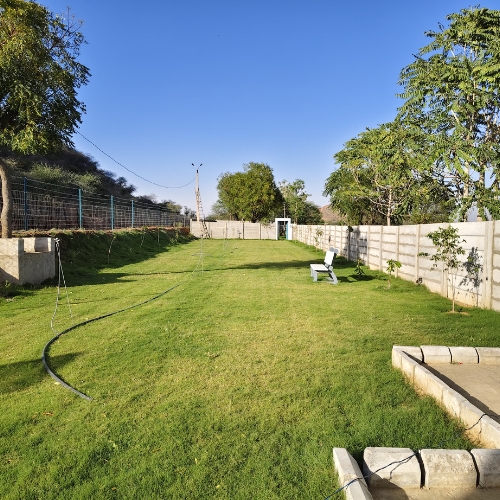
Every month, hundreds of professionals from Delhi, Gurugram, and Noida search for farmland in Rajasthan. Some want a personal retreat. Others want long-term investment returns. A growing number are drawn to eco-living owning a piece of natural landscape before it disappears under concrete.
What stops most of them is not money. It is uncertainty.
Buying agricultural land is genuinely different from buying a flat or a residential plot. Get it wrong and you risk legal disputes, demolition orders, or complications during resale sometimes years after the original transaction.
This guide covers every essential step from eligibility to mutation, with specific reference to the Alwar, Khairthal, and Tijara corridor, where buyer interest has grown most sharply in recent years.
Can Anyone Buy Agricultural Land in Rajasthan?
Yes and this is one of Rajasthan's biggest advantages over other Indian states.
Unlike Maharashtra, Gujarat, or Karnataka, where only registered farmers can buy agricultural land, Rajasthan places no such blanket restriction. Any Indian citizen, salaried professional, business owner, or first-time investor can legally purchase agricultural land in Rajasthan without producing a farmer's certificate.
The key legal condition, under Section 17 of the Rajasthan Agricultural Holdings Act, is that the land must be purchased from a Khaatedar, a registered landowner appearing in official revenue records. Informal sales that bypass government records are not legally valid.
One important exception: Non-Resident Indians (NRIs) and Persons of Indian Origin (PIOs) cannot directly purchase agricultural land anywhere in India under FEMA guidelines. They may inherit such property but cannot buy it outright. NRIs exploring Rajasthan land investment should consult a qualified legal advisor before proceeding.
For non-farmers planning commercial use such as agro-tourism or eco-resorts a District Collector's permission may be required. This process involves an application, documentation of intended use, and sometimes a site inspection.
Why Alwar, Khairthal, and Tijara Are the Smart Choice Right Now
Among all farmland corridors near Delhi NCR, the Alwar-Khairthal-Tijara belt stands out for three concrete reasons.
First, Khairthal-Tijara became a separate district in August 2023. New district status brings accelerated government infrastructure investment, better roads, electricity, and administrative services. Buyers who enter markets at this stage consistently see strong early appreciation.
Second, the Delhi-Mumbai Expressway (NH-148N) already connects Gurugram to Khairthal in under 90 minutes. The upcoming Delhi-Alwar RRTS (Regional Rapid Transit System) is expected to reduce this further and integrate the region even more deeply into the NCR economic zone.
Third, land prices here remain significantly lower than in comparable Haryana locations. Agricu ltural land in Sohna or Manesar costs three to five times more per bigha than in Khairthal, while offering far less natural landscape and weaker appreciation potential. The Aravalli Hills are absent in Haryana's flat plains they cannot be replicated anywhere else near Delhi NCR.
For buyers actively exploring a farmhouse plot for sale in Alwar or the wider Khairthal-Tijara belt, this window of lower entry prices alongside rising infrastructure investment is unlikely to last beyond the next two to three years.
Step-by-Step: The Legal Process for Buying Farmland in Rajasthan
Step 1: Verify the Land Classification
Before signing anything, confirm the land is legally classified as agricultural land. Visit Rajasthan's Apna Khata portal and search the Khasra number to check the Jamabandi, the primary government revenue record showing land type, ownership, and any existing liabilities. Land classified as Abadi (residential settlement), forest land, or government land cannot be privately purchased.
Step 2: Verify the Title Chain
Check ownership records going back at least 13 years, ideally 30. You are confirming that the seller is the sole legal owner, that no court disputes or government claims exist on the land, and that no mortgage or encumbrance is registered against it.
Obtain an Encumbrance Certificate (EC) from the Sub-Registrar's office. This document confirms whether any loan or legal claim is registered on the property. Skipping this step is the single most common reason buyers face problems post-purchase.
Step 3: Collect the Right Documents
From the seller: original Sale Deed or inheritance deed establishing ownership, Jamabandi from Apna Khata, Khasra and Khatoni records, Mutation Certificate (Daakhil Kharij), No-Dues Certificate from the Revenue Department, and identity documents.
From the buyer: Aadhar card, PAN card, passport photographs, and bank statements if a loan is involved.
Step 4: Understand Land Conversion
If you plan to build a farmhouse, weekend home, or any structure on the land, you must apply for Change of Land Use (CLU) converting the plot from agricultural to non-agricultural use through the local Revenue Department.
Under Rajasthan rules, this application must be made within one year of purchase. Construction must begin within three years of the conversion being approved. Building on unconverted agricultural land is illegal and can attract demolition orders.
This step is where many buyers face unexpected delays. Working with a company that handles conversion as a core service rather than treating it as an afterthought saves months of back-and-forth.
Step 5: Pay Stamp Duty and Register
The stamp duty on agricultural land in Rajasthan is 6% for male buyers and 5% for female buyers, applicable across both urban and rural areas. In rural areas, rates reduce to 5% for men and 4% for women, making land ownership more accessible for female investors. An additional 20% Labour Cess is charged on the stamp duty amount. A flat registration charge of 1% of the property's market value is payable at the Sub-Registrar's office.
As a practical example: on a ₹50 lakh rural land purchase by a male buyer, expect to pay ₹2.5 lakh in stamp duty (5%) + ₹50,000 Labour Cess (20% of stamp duty) + ₹50,000 registration charge a total add-on cost of approximately ₹3.5 lakh. A woman buyer on the same land would pay ₹2 lakh stamp duty + ₹40,000 cess + ₹50,000 registration = approximately ₹2.9 lakh. Note that pure agricultural transactions by farmers may qualify for stamp duty exemptions confirming eligibility with a legal advisor before registration.
Step 6: Complete Mutation
After registration, apply for mutation (Daakhil Kharij) at the local Patwari's office or online through the Rajasthan Revenue Department portal. Mutation updates the government's revenue records to reflect your name as the new owner. Without it, the seller's name continues to appear in official records even though you legally own the land.
Mutation is essential for future resale, bank loans, and inheritance. It typically takes 30 to 60 days after submission when there are no disputes.
5 Things Every Buyer Must Verify Before Signing
Based on hundreds of land transactions handled in the Khairthal-Tijara and Alwar district, these five checks are non-negotiable.
The seller's name must match exactly what appears in the Jamabandi. Any mismatch is a red flag for fraud or unresolved inheritance disputes.
An Encumbrance Certificate covering at least the last 12 to 15 years must show zero outstanding loans or legal claims.
Physical boundary verification must be done on-site. Walk the perimeter and confirm that what you are being shown matches the Khasra dimensions on paper. Boundary disputes are the most common source of rural land conflict.
Check whether any portion of the land falls under NHAI highway acquisition or state government reservation. Such land cannot be legally transferred, and sellers sometimes do not disclose this.
Confirm water access borewell, canal, or government supply. Land with no water source has significantly limited value for both farming and construction.
The Difference Between Buying Raw Land and a Developer Plot
When buying raw agricultural land from an individual seller, the buyer takes on full responsibility for obtaining conversion approvals, project clearances, and construction permissions, a process that can take 6 to 18 months and involves the Revenue Department, Town Planning, and local Panchayat.
When buying a verified farmhouse plot from a developer that has already completed compliance, the land comes with conversion approval, clean title documentation, and layout clearance. Registration is straightforward and construction can begin as per the approved plan.
Working with the best real estate consultant in Rajasthan makes a direct difference at this stage not just in finding the right plot, but in ensuring every legal and compliance step is handled correctly before you commit. Vyom Regency handles Land Compliance, Due Diligence, and Project Approvals as dedicated services. Every plot sold through their projects in Khairthal, Tijara, Alwar, and Mundawar comes with fully documented compliance verified title, mutation on record, and conversion approval in place before any buyer is asked to make a payment.
To schedule a no-obligation site visit or ask about available farmhouse plots for sale in Alwar and the Khairthal-Tijara belt, contact Vyom Regency at info@vyomregency.in or WhatsApp at +91-78188-13501.
Frequently Asked Questions
Can a salaried person from Delhi or Gurugram buy agricultural land in Rajasthan?
Yes. Rajasthan does not restrict land purchase to farmers only. Any Indian citizen can buy agricultural land in Rajasthan without a farmer's certificate. The land must be purchased from a registered Khaatedar.
Do I need to convert agricultural land before building a farmhouse?
Yes. Construction on unconverted agricultural land is illegal in Rajasthan. You must apply for Change of Land Use within one year of purchase, and construction must begin within three years of the conversion approval.
What is stamp duty on agricultural land in Rajasthan?
Stamp duty is 6% for male buyers and 5% for female buyers of the property's market value. In rural areas, rates reduce to 5% for men and 4% for women. An additional 20% Labour Cess is charged on the stamp duty amount. Registration charges are an additional 1% of the market value, payable at the Sub-Registrar's office.
What is mutation and why does it matter?
Mutation (Daakhil Kharij) updates government revenue records to show your name as the new owner after purchase. Without it, the seller's name remains in official records even after the Sale Deed is executed in your name. It is required for resale, bank loans, and legal inheritance.
Can an NRI buy farmland in Rajasthan?
No. Under FEMA guidelines, NRIs and PIOs cannot directly purchase agricultural land in India, including Rajasthan. They may inherit such property. NRIs should consult a legal advisor for compliant investment alternatives.
How long does the buying process take in Khairthal or Alwar?
For a developer plot with ready compliance documents, working with top real estate agents in Alwar like Vyom Regency means the process from site visit to registration typically takes 30 to 45 days. For raw land from an individual seller, expect 3 to 6 months depending on the complexity of title verification and mutation.